
Issue 11
February 2017
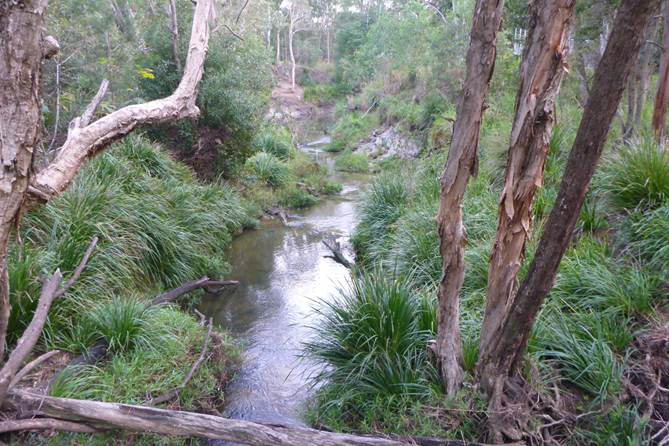
Fish flourishing in Hilliards Creek thanks to Cleveland dechlorination program
An upgrade of the wastewater disinfection process at the Cleveland wastewater treatment plant has resulted in more fish in Hilliards Creek, in numbers never before seen at the testing point.
In 2014, the Department of Environment and Heritage Protection (DEHP) issued an environmental authority (licence conditions) for discharging effluent to Hilliards Creek. One of the conditions was to identify and recommend alternative ways to manage treated wastewater to control potentially toxic impacts of chlorine on Hilliards Creek.
As an alternative management and treatment option, Council invested more than $100,000 to upgrade the wastewater disinfection facility at Cleveland wastewater treatment plant with the aim of completely removing chlorine from effluent.
Senior Process Engineer, Dr Scott McMurray, designed and managed the upgrade in collaboration with Maintenance Supervisor, Roy Lane. The environmental outcomes of the project have been measured and monitored by Environment Systems Officer, Patrina Webb and Scientific Officer, Cliff Casey. The project was commissioned in January 2017.
Key components of the project include:
- A new chemical storage bund with roof
- Dosing pump skid
- Outlet fittings on sodium bisulphate (SBS) storage vessel and dosing skid will be DN15 union type
- Installation of interconnecting dosing pipework
- Integration with the plant’s complete computer control
Although the process is still being refined, testing of the new unit has already shown a reduction in chlorine concentrations – and a positive impact on the local environment.


What is effluent chlorination?
The use of chlorine to disinfect wastewater is a well-established technology and is widely used to treat effluent before it is discharged into the environment. Chlorine is a disinfectant that is used at Cleveland wastewater treatment plant to effectively remove pathogens, including bacteria, viruses and contaminants which can cause a potential threat to humans, animals and the environment.
Chlorine is added in either gaseous form (Cl2) or as hypochlorite salts, and reduces potentially harmful micro-organisms in the wastewater.
Why do we need to reduce chlorine levels?
While chlorine is an effective disinfectant, it is potentially toxic if discharged into the environment. The wastewater disinfection process can result in the formation of residual by-products that may be harmful to the environment. Council is required to carry out strict monitoring in accordance with regulatory guidelines under DEHP. This occurs through regular sampling and testing to ensure that levels are within a recommended healthy range.
What is effluent dechlorination?
The addition of a reducing agent, such as sodium bisulphite, to remove chlorine from treated wastewater effluent prior to discharge to the environment.
Why is effluent dechlorination important?
While the levels of chlorine currently discharged are very low, they may be potentially toxic to the receiving environment. Dechlorination of the effluent removes any residual chlorine and reduces any harmful effects on the receiving environment.
What are the benefits to the community?
- Potentially healthier creeks and receiving environment
- Having chlorination and dechlorination is the best of both worlds. We chlorinate to disinfect and remove bacteria and viruses, then dechlorinate to remove the small concentration of toxic chlorine.
Are there any side effects from dosing with sodium bisulphate?
The reaction of sodium bisulphite (SBS) and chlorine forms ionic salts such as chloride and sulphate. These are known to be harmless. In large doses, SBS can reduce the amount of dissolved oxygen in the water. Our testing shows that the dissolved oxygen remains unaffected when controlled dosing is used.
See how the disinfection process works.
To read more about water monitoring guidelines and processes, please visit the DEHP.

