Redland City Council’s Pest Management Team has increased its mosquito treatments in response to the current peak breeding season.
Mayor Jos Mitchell said Council’s Mosquito Management Program operated year-round but ramped up between November and April, when a combination of hot temperatures and rain provided prime breeding conditions for mosquitoes.
“Council’s priority is to balance community comfort and environmental protection while encouraging residents to take practical personal precautions,” the Mayor said.
You may also like these stories


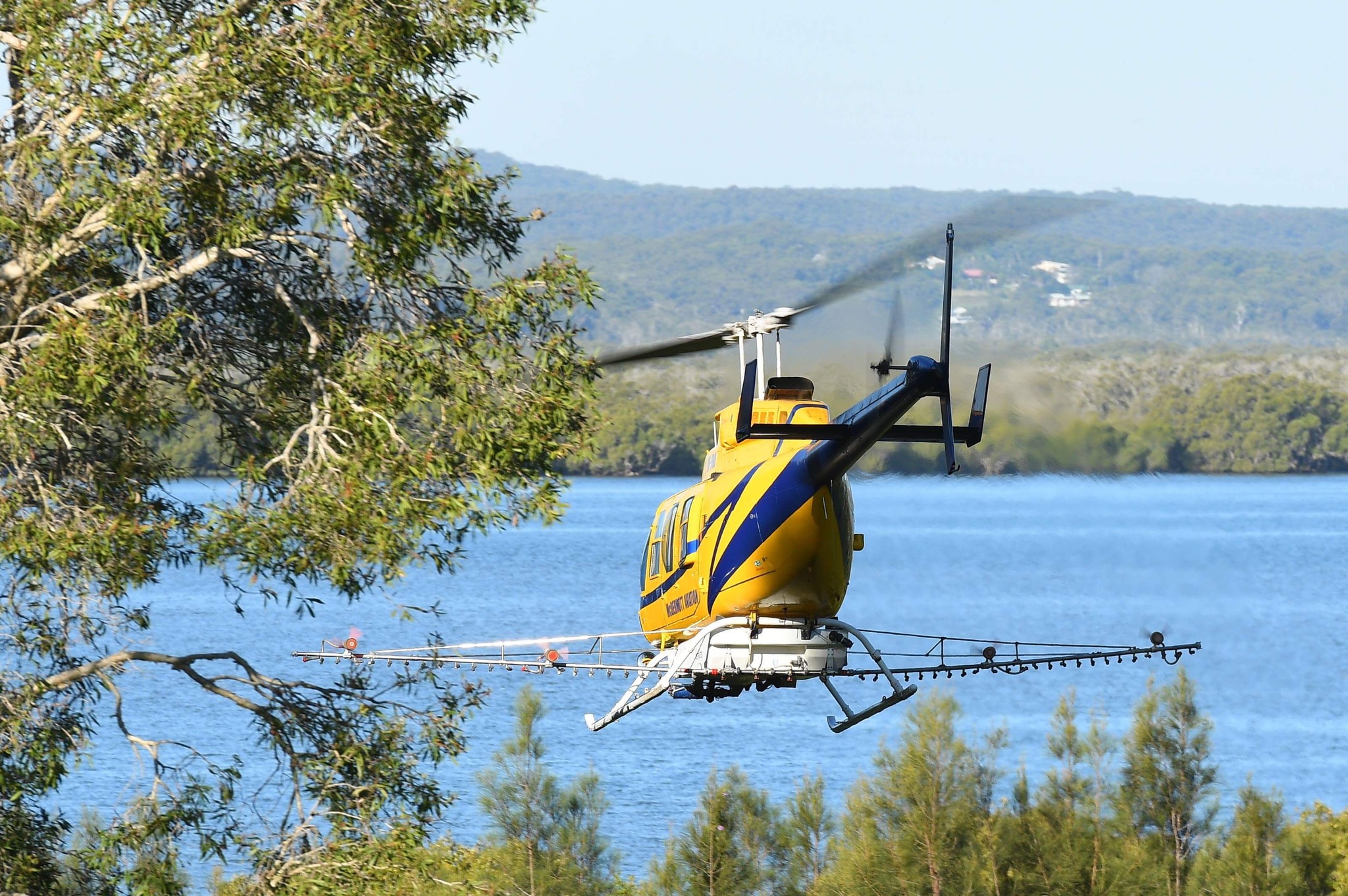
“The Mosquito Management Team regularly monitors mosquito breeding locations, particularly after heavy rain, and conducts aerial and ground treatments as required.
“The team covers nearly 10,000 hectares of land annually using helicopters, quad bikes and drones.
“As we are now in the peak breeding season for mosquitoes, Council has increased aerial treatments with a focus on coastal saltmarsh habitats along the bayside, Southern Moreton Bay Islands, North Stradbroke Island and other smaller uninhabited islands.”

The Mayor said the treatments targeted and killed mosquitoes in their larval form.
“These treatments are only harmful to mosquito larvae; they are not harmful to people, the environment or other small insects and wildlife,” the Mayor said.
“Unfortunately, it is impossible for Council to find or treat all breeding locations as mosquitoes are capable of breeding in very small pools of water.
“Residents can reduce the number of mosquitoes around their homes by emptying pooled water from items in the backyard, such as pot plant bases, blocked roof gutters, bird baths, sagging tarps or covers and old tyres.
“Unscreened rainwater tanks and unused swimming pools can also breed mosquitoes, so keep pools well maintained and chlorinated and screen rainwater tanks if possible.”
Biosecurity and Pest Management portfolio representative Cr Paul Golle said Council’s mosquito management program operated under strict environmental and public health regulations.
“Council’s treatments are targeted and approved under Council’s Marine Parks Permit,” Cr Golle said.
“Biting midges are also a nuisance for many residents and breed in tidal and estuarine zones within the Moreton Bay Marine Park.
“Under the Marine Parks Act 2004 and Regulation 2017, Council’s Marine Parks Permit issued by the State Government only permits the use of two types of chemicals within the Moreton Bay Marine Park area.
“These chemicals are (S)Methoprene and Bacillus Thuringiensis Israelensis (BTI) and, while both are harmful to mosquito larvae, they do not impact any other insects or organisms, including biting midge.
“There are no chemicals approved for use in natural environments, including the Moreton Bay Marine Park, that target and kill biting midge.
“This means Council cannot spray for biting midges in the marine park, as the chemicals suitable for midge larvae are not approved for use and would impact other important aquatic life and aquatic organisms.”
Cr Golle said there were a number of measures residents could take to protect themselves from mosquitoes and biting midges.
“Residents are encouraged to ensure screens are in good condition, wear light coloured, long, loose-fitting clothing and use insect repellents, mosquito coils or plug-in insecticide burners when outside, particularly at dawn and dusk,” Cr Golle said.
Information on Council’s mosquito management program, including the latest aerial treatments, is available on Council’s website. Information is also available on biting midges.